

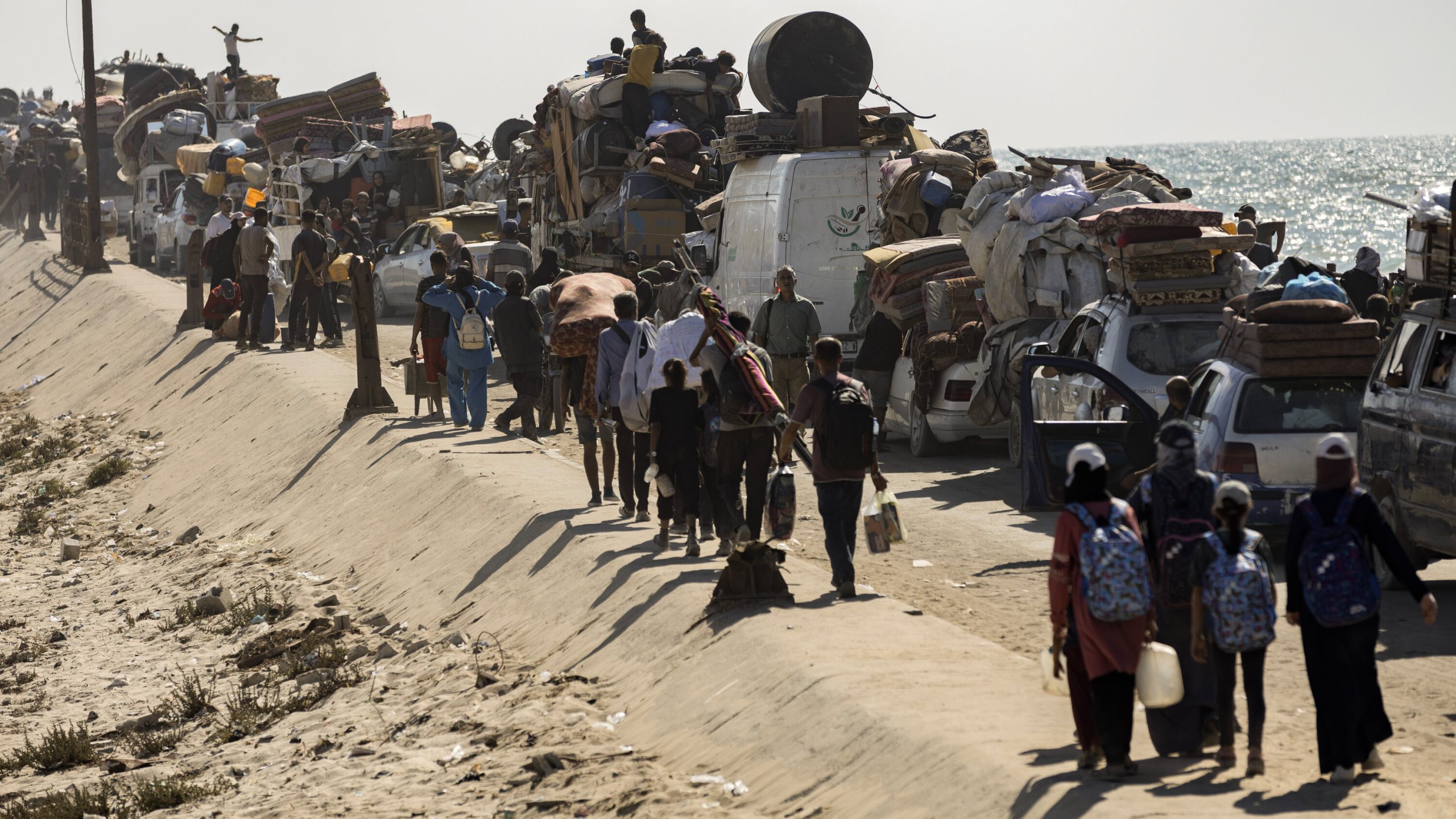
The streets of Gaza City have once again become a stage for fear, desperation, and survival as thousands of Palestinians flee their homes amid the relentless advance of Israeli troops. The latest wave of violence in the decades-long Israeli-Palestinian conflict has turned Gaza’s urban neighborhoods into battlegrounds, forcing families to abandon their lives in search of safety.
- The Escalation in Gaza City
- A Humanitarian Crisis Unfolding
- Voices from the Ground
- The Military Perspective
- International Reaction and Diplomacy
- The Role of Media and Information Warfare
- The Impact on Children and Families
- Regional Consequences and Security Risks
- The Struggle for Peace and Justice
- Expert Opinions and Analysis
- FAQs
- Why are Palestinians fleeing Gaza City now?
- What is Israel’s stated objective in advancing into Gaza City?
- How is the international community responding?
- What are the humanitarian conditions for displaced Palestinians?
- What impact does this crisis have on children?
- Could this conflict spread to other regions?
- Conclusion
The mass displacement reflects not just a humanitarian crisis but also a broader geopolitical struggle that continues to destabilize the region and capture global attention. The images emerging from Gaza show crowded trucks filled with belongings, parents carrying children through rubble, and elderly residents leaning on makeshift crutches as they attempt to escape advancing military forces. For many, there is no clear destination—only the urgent need to move away from the sound of artillery and the shadow of approaching tanks.
The Escalation in Gaza City
The Israeli troop advance into Gaza City represents one of the most significant escalations in recent months. According to local officials and humanitarian groups, the operation has intensified airstrikes and ground incursions in densely populated neighborhoods. Israel argues that its military actions are aimed at dismantling militant infrastructure, targeting Hamas command centers, and weakening armed factions that continue to launch rockets into Israeli territory.
However, the reality on the ground tells a much more complex story. Civilian casualties have risen sharply, hospitals are overwhelmed, and water and electricity shortages are crippling daily life. For Palestinians, the offensive has created unbearable living conditions, pushing thousands to flee with little more than the clothes on their backs.
A Humanitarian Crisis Unfolding
The United Nations has estimated that over one million Palestinians in Gaza have already been displaced since the conflict intensified earlier this year, and the latest troop movements are adding to that staggering figure. Aid organizations warn that Gaza’s shelters, already stretched beyond capacity, cannot accommodate the growing tide of refugees.
Families are sleeping in overcrowded school buildings, public courtyards, and even on the streets. Humanitarian corridors have been promised but remain limited and uncertain, with many Palestinians expressing fear that movement through them could expose them to danger. The lack of secure refuge highlights the dire humanitarian emergency—food shortages, contaminated drinking water, and limited access to medical care are rapidly turning displacement into a fight for survival.
Voices from the Ground
Personal testimonies from fleeing Palestinians paint a haunting picture. A mother of three, interviewed by a regional journalist, described how she carried her youngest child for hours while bombs fell around them, her voice trembling as she admitted, “I do not know where we are going, but staying meant certain death.”
An elderly man recounted leaving behind his home, the same house where he was born, saying, “I have nothing left. My land, my family history, it is all being destroyed.” These stories echo across Gaza, humanizing statistics and transforming them into tales of resilience, despair, and relentless survival.
The Military Perspective
From Israel’s standpoint, the operation in Gaza City is framed as a necessary security measure. Israeli defense officials argue that Hamas and other armed factions use civilian neighborhoods as shields for their operations, embedding weapons depots and tunnels within residential areas.
Military spokespersons emphasize that precision strikes are carried out to minimize civilian harm, though critics argue that the scale of destruction suggests otherwise. The Israeli government maintains that dismantling militant strongholds in Gaza City is vital for national security and for the protection of its citizens against rocket fire. This justification, however, continues to fuel fierce debate internationally.
International Reaction and Diplomacy
Global reactions to the troop advance and subsequent displacement of Palestinians have been swift and divided. The United States, a long-time ally of Israel, has called for restraint while reaffirming Israel’s right to defend itself. In contrast, many countries in the Middle East and beyond have condemned the operation, labeling it a disproportionate use of force against civilians.
The United Nations has called for an immediate ceasefire and urgent humanitarian aid delivery, warning that Gaza is on the brink of a catastrophe. Yet, diplomatic efforts remain paralyzed by geopolitical divides, with competing narratives and interests preventing a unified response.
The Role of Media and Information Warfare
The conflict is not only fought on the ground but also through narratives. International media outlets are flooded with conflicting accounts of events in Gaza City, each framed through political lenses. On one side, Israeli officials circulate images of destroyed rocket launchers, while on the other, Palestinian groups share heartbreaking visuals of lifeless children being carried through rubble. Social media has amplified these competing narratives, often blurring the lines between verified facts and propaganda. This battle of information shapes global public opinion and adds further complexity to resolving the crisis.
The Impact on Children and Families
Among the most devastating aspects of the troop advance into Gaza City is its impact on children. UNICEF estimates that over half of Gaza’s population are children, many of whom have now witnessed multiple wars in their short lifetimes. Schools have been reduced to rubble, robbing them of education and stability, while psychological trauma lingers as they struggle to process the violence around them.
Families, torn apart by displacement and loss, face the painful reality that even survival offers little comfort when the future remains so uncertain. Experts in child development warn that the long-term mental health consequences could be severe, leaving a generation scarred by conflict.
Regional Consequences and Security Risks
The crisis in Gaza City extends far beyond the borders of the enclave. Regional analysts warn that the displacement of thousands of Palestinians could fuel instability across the Middle East. Neighboring countries, already hosting millions of refugees from previous conflicts, fear an added burden.
Furthermore, the military escalation risks igniting wider confrontations with armed groups in Lebanon or the West Bank. The delicate balance of regional alliances could shift if the conflict continues, drawing in international powers and creating a ripple effect that destabilizes broader Middle Eastern security.
The Struggle for Peace and Justice
At the heart of this crisis is the enduring question of peace. For decades, attempts at negotiations have faltered, leaving Palestinians in Gaza caught between militant factions and military offensives, with little progress toward a lasting solution. Human rights organizations argue that the cycle of displacement and destruction erodes any chance of building trust between the two sides.
Without meaningful dialogue, accountability, and compromise, Gaza’s residents remain trapped in a cycle of suffering. Experts suggest that unless political leaders commit to addressing the root causes—territorial disputes, security concerns, and recognition of rights—Gaza will continue to burn under the weight of conflict.
Expert Opinions and Analysis
Middle East analysts emphasize that the current crisis underscores the failure of international diplomacy to address the deeper grievances fueling the conflict. Dr. Sara Hassan, a political science professor specializing in Middle Eastern affairs, argues, “The displacement of Palestinians is not just a humanitarian emergency—it is a political failure. Until the world acknowledges the underlying issues of occupation, blockade, and security fears on both sides, the cycle will never end.” Such expert analysis highlights the interconnectedness of humanitarian concerns and political realities, urging global actors to engage more constructively.
FAQs
Why are Palestinians fleeing Gaza City now?
Palestinians are fleeing due to the Israeli military’s latest ground advance into Gaza City, which has intensified airstrikes, shelling, and fighting in residential areas. With rising civilian casualties and destroyed infrastructure, families are forced to abandon their homes in search of safety.
What is Israel’s stated objective in advancing into Gaza City?
Israel argues that the operation is aimed at dismantling Hamas military infrastructure, including tunnels and command centers, which are often embedded in civilian neighborhoods. Israeli officials frame the operation as a defensive measure to protect against ongoing rocket attacks.
How is the international community responding?
The international response is divided. The United States has reiterated support for Israel’s right to self-defense while urging caution, while many other nations and humanitarian organizations condemn the operation as disproportionate. The United Nations has called for a ceasefire and greater humanitarian access.
What are the humanitarian conditions for displaced Palestinians?
Conditions are dire. Shelters are overcrowded, food and water supplies are critically low, and hospitals are overwhelmed. Many displaced families lack access to basic necessities, and humanitarian agencies warn that Gaza is nearing the brink of catastrophe.
What impact does this crisis have on children?
Children in Gaza are experiencing severe trauma, disrupted education, and widespread displacement. UNICEF warns that the long-term psychological impact could create a generation scarred by conflict, with serious consequences for their well-being and development.
Could this conflict spread to other regions?
Yes. Analysts warn that continued escalation in Gaza could spark wider instability in the Middle East, potentially drawing in groups from neighboring countries like Lebanon and heightening regional tensions.
Conclusion
The mass flight of Palestinians from Gaza City amid the advance of Israeli troops is a vivid reminder of the devastating human cost of protracted conflict. Beyond the rubble and statistics lies a human story of mothers, fathers, and children uprooted from their homes, forced into an uncertain future.
The crisis underscores the urgent need for a lasting political solution that prioritizes human dignity, security, and justice on both sides. Until such a resolution is found, the people of Gaza will continue to bear the brunt of a war that has spanned generations, with displacement and destruction as its relentless companions.