

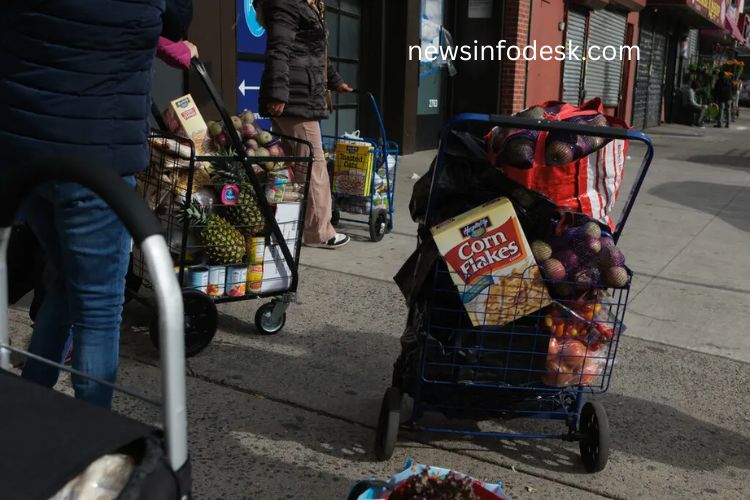
- Billions Available — Yet Millions Left Waiting
- A Glimpse Into a Shutdown Strategy
- The Human Cost of Political Posturing
- A Shutdown Unlike Any Other
- Disparate Impacts, Deepening Inequality
- The Politics of Hunger
- A Judge’s Intervention and Lingering Uncertainty
- Leadership and Responsibility in Crisis
- The Path Forward
- Frequently Asked Questions:
- What are Trump’s food stamp cuts about?
- How many people were affected by the SNAP funding delay?
- Why did the White House claim it couldn’t fund SNAP?
- How did the courts get involved?
- What does this reveal about Trump’s shutdown strategy?
- Was this the longest federal shutdown in U.S. history?
- How did the shutdown impact local communities?
- Conclusion
As the federal shutdown drags into its fifth week, the ripple effects are being felt across America’s most vulnerable communities. For millions of low-income families, the standoff in Washington has turned daily survival into a question mark. At the heart of this crisis lies the nation’s largest anti-hunger initiative — the Supplemental Nutrition Assistance Program (SNAP) — a lifeline that feeds roughly 42 million people.
Vice President JD Vance summed up the bleak situation by saying, “The American people are already suffering, and the suffering is going to get a lot worse.” His statement reflects the grim reality facing families as uncertainty over food assistance deepens.
Read More: http://newsinfodesk.com/indias-rbi-strikes-again-to-shield/
Billions Available — Yet Millions Left Waiting
Ironically, the administration has access to billions of dollars, more than enough to sustain SNAP during the shutdown. Despite this, the White House delayed action, claiming limited authority to distribute funds. Only after a federal judge intervened did President Trump acknowledge he could, in fact, allocate money to keep food benefits flowing.
This hesitation left agencies scrambling and recipients anxious. For families living paycheck to paycheck, even a short delay in benefits can mean empty refrigerators and impossible choices between food, medicine, and rent. The confusion has only deepened the frustration of Americans who rely on programs designed to provide stability during hard times.
A Glimpse Into a Shutdown Strategy
The ongoing budget impasse has exposed a deeper strategy at play. Rather than seeking compromise, the White House appears to be using the shutdown as a political weapon — protecting some groups while allowing others to suffer the consequences. Military paychecks have been prioritized, while low-income families dependent on SNAP remain uncertain about their next meal.

By selectively shielding certain sectors, the administration is shaping the shutdown’s impact to serve a broader political agenda. This approach marks a significant shift from previous government closures, where presidents sought quick resolutions to minimize public harm. In contrast, Trump’s team seems willing to let hardship spread as leverage in a larger battle over federal spending and policy priorities.
The Human Cost of Political Posturing
Behind the political maneuvering are real people — parents stretching the last of their groceries, children skipping meals, and communities struggling to fill the gap with food banks already overwhelmed by demand. For many Americans, SNAP benefits are not a luxury but a basic necessity that keeps hunger at bay.
The program’s disruption exposes how deeply intertwined federal assistance is with everyday life. From rural towns to urban centers, SNAP injects billions into local economies, supporting grocery stores, farmers, and food producers. When benefits stall, entire supply chains feel the strain.
A Shutdown Unlike Any Other
This standoff has become more than a fight over budgets; it’s a test of governance. Trump’s willingness to stretch the rules of fiscal management for political advantage sets this shutdown apart from those of the past. He has found creative ways to fund certain priorities — such as military spending — while claiming helplessness in aiding low-income citizens.
Critics argue that this selective protection reveals the administration’s deeper objectives: rewarding political allies and pressuring opponents through hardship. Supporters, however, see it as a bold attempt to challenge a system they view as bloated and inefficient. Whatever the perspective, the result remains the same — millions of Americans trapped in uncertainty.
Disparate Impacts, Deepening Inequality
The effects of the shutdown are not distributed evenly. Wealthier Americans can absorb short-term disruptions; those at the margins cannot. Single parents, seniors, and disabled individuals are among the hardest hit. Many are forced to rely on local charities and food pantries that are themselves under financial strain due to the halted federal support.
Communities already struggling with high unemployment face even greater hardship as the economic ripple spreads. Small businesses that depend on SNAP purchases — especially in rural areas — report declining sales. Meanwhile, public servants working without pay join the growing ranks of those seeking assistance.
The Politics of Hunger
For decades, food stamps have been both a humanitarian tool and a political flashpoint. Conservatives often argue for stricter eligibility and reduced spending, while progressives see the program as essential to public health and social equity. In this latest showdown, SNAP has once again become a symbol — this time of how far political leaders are willing to go to advance their agendas.
By withholding aid to millions of families, the administration underscores its belief that financial pain can serve as a political motivator. Yet this gamble risks alienating voters who may see such tactics as cruel and unnecessary. Hunger, after all, does not discriminate by party line.
A Judge’s Intervention and Lingering Uncertainty
The judiciary’s intervention provided temporary relief, ensuring that funds could reach SNAP recipients for now. But the broader question remains: what happens if the shutdown continues? Federal reserves are not infinite, and without congressional action, the administration’s ability to sustain payments will erode quickly.
Analysts warn that if the standoff extends much longer, millions could face benefit cuts or delays. The ripple effect on food security, public health, and local economies could last long after the government reopens.
Leadership and Responsibility in Crisis
The shutdown has become a test of leadership for both the president and Congress. While each side blames the other, the cost of inaction continues to rise. Effective governance requires empathy, foresight, and compromise — qualities increasingly rare in today’s polarized environment.

Many Americans now view the episode as a cautionary tale about the fragility of safety-net programs when political games overshadow public welfare. The longer leaders remain entrenched in their standoff, the greater the damage to the nation’s social fabric.
The Path Forward
Restoring confidence in government requires more than temporary fixes. Policymakers must ensure that programs like SNAP are insulated from political brinkmanship. Creating automatic funding safeguards during shutdowns could protect vulnerable citizens from unnecessary suffering. Beyond that, both parties must acknowledge that national prosperity depends on ensuring basic needs are met for all Americans.
The shutdown’s legacy will be measured not only in lost dollars but in lost trust. Every delayed payment, every empty grocery cart, and every hungry child tells a story of leadership failure — and of a country caught between politics and compassion.
Frequently Asked Questions:
What are Trump’s food stamp cuts about?
The cuts refer to the Trump administration’s decision to restrict or delay funding for the Supplemental Nutrition Assistance Program (SNAP) during the federal government shutdown. This move left millions of low-income Americans uncertain about when they would receive their food benefits.
How many people were affected by the SNAP funding delay?
Approximately 42 million Americans rely on SNAP benefits. During the shutdown, millions faced potential delays or reductions in their monthly food assistance, putting families, seniors, and children at risk of food insecurity.
Why did the White House claim it couldn’t fund SNAP?
The administration initially argued that it lacked the authority to allocate funds during the shutdown. However, later findings — and a federal judge’s intervention — revealed that billions were available for SNAP, exposing inconsistencies in the government’s justification.
How did the courts get involved?
A federal judge intervened, clarifying that the administration could legally use existing funds to sustain SNAP during the shutdown. This ruling forced the White House to take action and prevented an immediate food crisis for millions of families.
What does this reveal about Trump’s shutdown strategy?
The situation highlighted a selective approach. The Trump administration prioritized funding for certain groups, like the military, while withholding support for others, such as low-income Americans relying on food stamps. Analysts saw this as part of a broader political strategy to pressure Congress and advance the president’s policy agenda.
Was this the longest federal shutdown in U.S. history?
Yes. The standoff extended beyond previous shutdowns, becoming the longest in American history at the time. It caused widespread disruption across government services and put hundreds of thousands of federal workers on furlough or unpaid duty.
How did the shutdown impact local communities?
Local economies that depend on SNAP spending were hit hard. Grocery stores, farmers, and small businesses saw reduced sales, while food banks faced overwhelming demand as families sought emergency supplies to replace missing benefits.
Conclusion
The controversy over Trump’s food stamp cuts and the prolonged federal shutdown exposed more than a budget dispute — it revealed the human cost of political power plays. Millions of Americans who depend on SNAP for their next meal were left in limbo, caught between partisan agendas and bureaucratic indecision. The episode underscored how easily essential programs can be turned into tools of leverage, leaving vulnerable families to bear the consequences. Moving forward, the nation faces a crucial test: whether it can build safeguards that protect vital social services from political manipulation.