

- Data Reveals Signs of Recovery
- JLR’s Restart: A Key Catalyst
- A Fragile Foundation for Growth
- Policy Uncertainty Dampens Optimism
- The Broader Context: A Global Manufacturing Slowdown
- Technology and Resilience: Lessons from the Cyberattack
- Balancing Caution and Confidence
- Frequently Asked Questions:
- What caused the recent rise in UK manufacturing output?
- How significant is the UK’s manufacturing growth?
- Why was Jaguar Land Rover’s restart so important?
- Is the current growth in UK manufacturing sustainable?
- What challenges still face UK manufacturers?
- How did the JLR cyberattack affect the UK economy?
- What are experts saying about the future of UK manufacturing?
- Conclusion
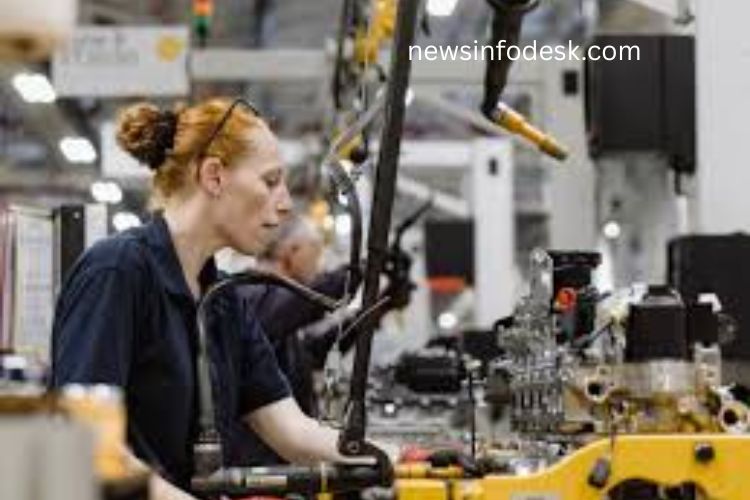
After months of struggle and uncertainty, the UK manufacturing sector has finally shown signs of revival. For the first time in a year, output expanded in October, marking a pivotal moment for an industry that has endured supply chain disruptions, global demand slowdowns, and economic uncertainty.
This recovery comes largely thanks to the restart of operations at Jaguar Land Rover (JLR), whose return to production following a damaging cyberattack helped inject much-needed momentum into Britain’s manufacturing output. The resurgence has reignited cautious optimism across the industrial landscape, even as lingering challenges temper the enthusiasm.
Read More: http://newsinfodesk.com/trumps-controversial-food-stamp-cuts/
Data Reveals Signs of Recovery
According to the latest S&P Global Purchasing Managers’ Index (PMI) survey, UK manufacturing output rose for the first time in twelve months. The PMI climbed to 49.7 in October, up from 46.2 in September, reaching its highest point in a year. Although the index remains slightly below the 50-mark — which separates contraction from growth — the uptick signals that the downturn may be easing.
Production increases were most visible in the consumer goods and intermediate goods sectors, both benefiting from JLR’s staged restart of manufacturing. The automaker’s recovery provided a much-needed lift to related supply chains, creating ripple effects across the broader economy.
For many factories, this small but crucial expansion represents a breath of fresh air after months of stagnation. Still, the industry remains cautious about whether this rebound can evolve into sustainable growth.
JLR’s Restart: A Key Catalyst
The turning point came with Jaguar Land Rover’s phased restart in early October. The company had faced a crippling cyberattack that forced a complete shutdown of its production lines for nearly a month. This unprecedented disruption pushed UK car manufacturing output to its lowest level in 73 years, dealing a significant blow to both the automotive sector and the country’s industrial confidence.
When production resumed, it provided a sudden boost to the broader manufacturing ecosystem. Automotive suppliers, logistics networks, and component manufacturers all saw a surge in activity. However, industry experts warn that this effect may be temporary unless broader demand picks up.
The JLR rebound has undoubtedly brightened short-term prospects, but many analysts see it as a “temporary spike” rather than a long-term trend. Sustained recovery will require consistent orders, new investments, and stronger export demand — areas that continue to face headwinds.
A Fragile Foundation for Growth
Despite the improvement in October, several underlying weaknesses remain. Rob Dobson, Director at S&P Global Market Intelligence, described the rebound as encouraging but fragile. He cautioned that much of October’s production boost came from firms working through backlogs of previous orders and allowing unsold stock to accumulate, rather than responding to new market demand.
In other words, while factories produced more goods, the increase wasn’t necessarily driven by new sales or stronger demand — a warning sign that the recovery might not hold. Domestic and international orders both remain weak, underscoring the challenges facing UK exporters amid global trade tensions and economic slowdown.
Furthermore, businesses are battling high energy costs, rising interest rates, and wage pressures, all of which continue to squeeze margins.
Policy Uncertainty Dampens Optimism
Adding to the pressure are concerns about fiscal policy and regulatory burdens. Manufacturers remain anxious about how upcoming government decisions — especially the autumn Budget — could affect costs and competitiveness.
Industry leaders fear that increases in the National Minimum Wage (NMW) and employer National Insurance Contributions (NICs) may raise operational expenses, further straining profit margins. Many factory owners are adopting a cautious stance, deferring expansion plans until the government’s budgetary direction becomes clearer.
Although business optimism reached an eight-month high in October, it still lingers below long-term averages. Manufacturers appear to be waiting for greater policy stability before committing to growth strategies.
The Broader Context: A Global Manufacturing Slowdown
The UK’s tentative rebound stands in contrast to a broader global slowdown. Manufacturing sectors in Europe, the United States, and parts of Asia have also been grappling with declining demand, rising costs, and supply chain vulnerabilities.
In the United States, factories have seen export volumes weaken due to trade tariffs, while Europe continues to struggle with subdued consumer confidence and high borrowing costs. Against this backdrop, the UK’s slight improvement offers a rare glimmer of hope — but it also highlights how dependent national recoveries are on global economic conditions.
The interplay between domestic recovery efforts and international market dynamics will play a defining role in whether UK manufacturing sustains its current momentum or slips back into contraction.
Technology and Resilience: Lessons from the Cyberattack
The cyberattack on Jaguar Land Rover served as a stark reminder of the vulnerabilities modern industries face. The disruption not only halted vehicle production but also exposed the fragile interdependence of global supply networks.
In response, manufacturers across the UK are now prioritizing digital resilience — strengthening cybersecurity systems, modernizing IT infrastructure, and building more robust contingency plans. Many are also investing in automation and AI-driven manufacturing solutions to improve efficiency, reduce downtime, and guard against future shocks.
The renewed focus on digital transformation could be one of the most significant long-term benefits arising from this crisis. By reinforcing technological infrastructure, UK manufacturers may be better equipped to handle future disruptions — whether from cyber threats, supply shortages, or economic volatility.
Balancing Caution and Confidence
As the dust settles, the outlook for UK manufacturing is mixed. The sector’s return to growth marks a positive milestone, signaling resilience after a turbulent year. Yet, with demand still weak and uncertainties surrounding fiscal policy, energy prices, and global trade, the road ahead remains uneven.
Manufacturers are urging the government to provide a clear industrial strategy that promotes investment, innovation, and export growth. Targeted support for small and medium-sized enterprises (SMEs), tax incentives for technology adoption, and streamlined trade agreements could help solidify the recovery.
Meanwhile, companies themselves must focus on agility — optimizing supply chains, diversifying markets, and embracing digital transformation to stay competitive in an unpredictable environment.
Frequently Asked Questions:
What caused the recent rise in UK manufacturing output?
The rebound was primarily driven by the restart of Jaguar Land Rover’s (JLR) production after a cyberattack forced a month-long shutdown. This revival boosted overall factory activity, particularly in the consumer and intermediate goods sectors.
How significant is the UK’s manufacturing growth?
According to S&P Global, the UK Manufacturing Purchasing Managers’ Index (PMI) rose to 49.7 in October, its highest level in a year. Although still below the growth threshold of 50, the rise indicates a slowdown in contraction and a potential turning point for the industry.
Why was Jaguar Land Rover’s restart so important?
JLR’s phased restart provided a powerful short-term lift to the UK’s manufacturing output. The company’s operations influence a wide network of suppliers, logistics providers, and parts manufacturers — meaning its return to production helped energize the entire sector.
Is the current growth in UK manufacturing sustainable?
Experts remain cautious. Much of the October growth came from clearing backlogs of old orders rather than new demand. Without stronger domestic and export orders, the improvement may be short-lived.
What challenges still face UK manufacturers?
Manufacturers continue to grapple with rising costs, weak global demand, energy price pressures, and policy uncertainty. Concerns about upcoming budget measures, such as higher wages and employer contributions, also add financial strain.
How did the JLR cyberattack affect the UK economy?
The cyberattack halted JLR production for nearly a month, sending UK car output to its lowest level in 73 years. The disruption rippled through the supply chain, affecting hundreds of smaller manufacturers and suppliers tied to the automotive sector.
What are experts saying about the future of UK manufacturing?
Analysts like Rob Dobson from S&P Global warn that while October’s figures are encouraging, true recovery depends on consistent new orders, export growth, and clearer government policies. Optimism is rising but remains below long-term averages.
Conclusion
The revival of UK manufacturing, sparked by Jaguar Land Rover’s return to production, marks a powerful moment of renewal for an industry long weighed down by disruptions and uncertainty. October’s improvement signals resilience, innovation, and determination across Britain’s factories — proof that even after severe setbacks, recovery is possible. However, this resurgence remains fragile. The rebound has been fueled more by temporary factors than sustained market demand. To transform this short-term boost into lasting progress, the UK must strengthen its industrial foundations through clear policy direction, investment incentives, digital modernization, and export growth.


