
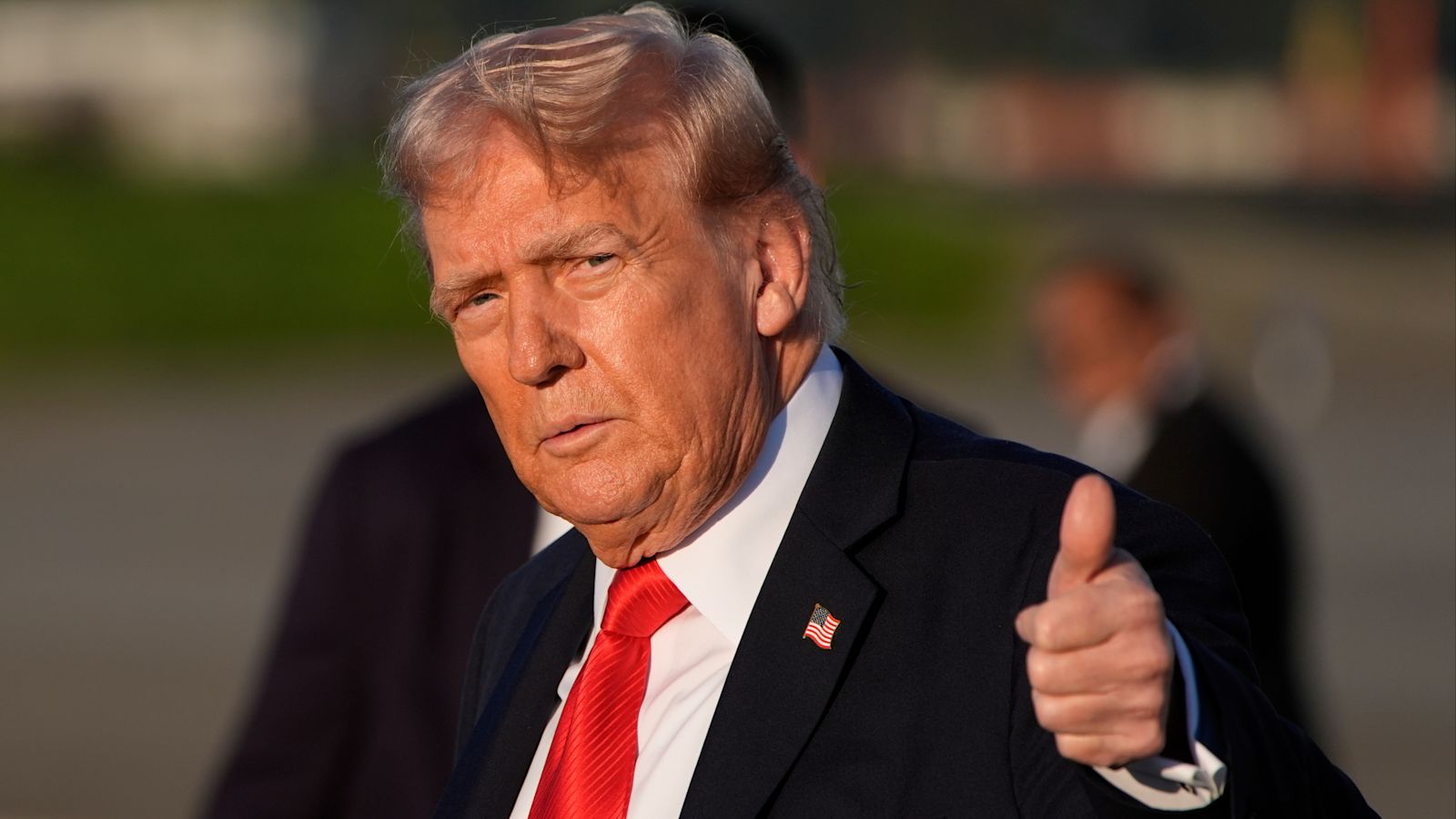
In recent weeks, global attention has been drawn once again to the intersection of geopolitics, energy markets, and the delicate balance of international alliances. Former U.S. President Donald Trump, who has returned to the world stage with renewed rhetoric and influence, has issued a stark warning: NATO allies who continue to buy Russian oil may face American sanctions.
- The Context Behind Trump’s Sanction Threats
- Energy as a Geopolitical Weapon
- Reactions from European Capitals
- The U.S. Domestic Angle
- Economic Implications of Sanctions
- Expert Perspectives on the Sanction Threats
- Historical Precedents of Energy Sanctions
- The Risk of NATO Fragmentation
- Future Scenarios: Where Does This Lead?
- FAQs
- Why is Trump threatening sanctions on NATO allies over Russian oil?
- Which NATO countries are still buying Russian oil?
- How would sanctions on NATO allies impact Europe’s economy?
- Could U.S. energy companies benefit from these sanctions?
- Would sanctions on NATO allies weaken the alliance?
- Conclusion
This threat underscores the enduring tensions between Washington, Moscow, and Europe, and it reveals just how deeply energy dependence shapes the strategic decisions of global powers. While Trump’s words carry political weight, they also raise pressing questions about the future of NATO unity, Europe’s energy security, and the global effort to reduce reliance on Russian fossil fuels.
The Context Behind Trump’s Sanction Threats
Donald Trump has long positioned himself as a leader who emphasizes “toughness” in foreign policy. During his presidency, he repeatedly criticized NATO members for not spending enough on defense and for being too reliant on Russian energy, especially natural gas. His latest remarks about sanctions follow a familiar pattern but arrive at a critical moment. Russia’s energy exports remain one of the Kremlin’s most powerful tools for funding its economy and sustaining its military campaigns, particularly after years of strained relations with the West.
While the European Union has pledged to gradually reduce its reliance on Russian oil and gas since the outbreak of the Ukraine war, the reality has proven more complicated. Certain NATO allies, particularly those in Central and Eastern Europe, continue to import Russian oil through pipelines that were exempted from earlier sanctions due to geographic and economic constraints. Trump’s threat, therefore, directly targets this lingering dependency and reflects his broader strategy of pressuring allies into compliance with U.S. geopolitical goals.
Energy as a Geopolitical Weapon
Energy has long been more than just an economic resource; it is a geopolitical weapon. Russia’s dominance in the oil and gas sector has historically given it leverage over European nations. In 2021, before the escalation of the Ukraine war, Russia supplied around 40% of the European Union’s gas imports and 25% of its oil. These numbers have since declined, but Moscow still plays a significant role in European energy markets, especially for countries like Hungary, Slovakia, and the Czech Republic, which rely heavily on Russian pipeline oil.
Trump’s warning highlights how energy dependency undermines NATO unity. If some allies continue to buy Russian oil, they indirectly finance the Kremlin’s war machine, contradicting the collective security principles that NATO is meant to uphold. The U.S., which has expanded its liquefied natural gas (LNG) exports to Europe in recent years, positions itself not only as a political leader but also as a potential replacement supplier. This dual role adds another layer of complexity, as Trump’s threat could be seen as both a geopolitical strategy and an economic opportunity for American energy producers.
Reactions from European Capitals
The response to Trump’s warning has been mixed across Europe. Some leaders see it as a necessary push to finally sever ties with Russian energy. Poland, for instance, has been one of the most vocal critics of Russian energy dependency and has already diversified much of its supply. On the other hand, Hungary’s Prime Minister Viktor Orbán has defended continued imports, arguing that his country’s economy cannot function without Russian oil in the short term.
Germany, Europe’s largest economy, finds itself in a more complex position. Although Berlin has made significant strides in reducing its reliance on Russian energy—most notably by halting the Nord Stream 2 pipeline project—it still struggles with the high costs of energy diversification. Trump’s threat of sanctions could therefore create tensions within the NATO alliance, forcing Germany and others to balance their domestic economic needs with broader geopolitical commitments.
The U.S. Domestic Angle
Trump’s threat is not only aimed at Europe but also at his domestic audience. By taking a hard line on Russia and NATO, he reinforces his image as a leader who prioritizes American strength and global leadership. Energy independence has long been a Republican talking point, and Trump often boasts about how under his leadership the U.S. became a net exporter of energy. His latest remarks may also appeal to American energy companies eager to expand their market share in Europe, particularly in LNG exports.
At the same time, Trump’s rhetoric could influence the broader U.S. political debate about foreign policy. Critics argue that sanctioning NATO allies could fracture the alliance and weaken collective defense against Russia. Supporters, however, claim that without tough measures, European nations will never fully abandon their reliance on Russian oil.
Economic Implications of Sanctions
If the U.S. were to impose sanctions on NATO allies over Russian oil purchases, the economic consequences would be significant. Sanctions could disrupt trade, weaken transatlantic relations, and potentially trigger retaliatory measures. For European economies already under pressure from high energy prices and inflation, additional restrictions could exacerbate economic instability.
On the other hand, sanctions could accelerate Europe’s shift toward renewable energy and alternative suppliers. The EU has already invested heavily in solar, wind, and hydrogen projects, but the transition will take time. Trump’s threats may therefore push European nations to speed up their efforts, though at a high short-term cost.
Expert Perspectives on the Sanction Threats
Energy analysts and geopolitical experts have weighed in on Trump’s remarks with caution. According to Dr. Emily Harding of the Center for Strategic and International Studies, “Sanctioning allies is a drastic step that could backfire. NATO thrives on unity, and if Washington alienates its partners, it risks weakening the very alliance it seeks to strengthen.”
Meanwhile, economist Lars Petersen from the European Policy Institute noted, “Trump’s warnings must be understood in both political and economic terms. Yes, it’s about Russia, but it’s also about promoting U.S. energy exports. Europe should be wary of replacing one dependency with another.”
These insights highlight the complex nature of Trump’s threat—it is not simply about punishing Russia but about reshaping global energy and political dynamics.
Historical Precedents of Energy Sanctions
This is not the first time energy has been at the center of global sanctions. During the Cold War, the U.S. imposed restrictions on technology transfers to the Soviet Union’s energy sector. More recently, Washington led sanctions on Iran’s oil exports, significantly weakening Tehran’s economy. The difference now is that Trump’s proposed sanctions would target allies, not adversaries. Such a move would mark a major departure from traditional U.S. foreign policy and could redefine the role of sanctions in global diplomacy.
The Risk of NATO Fragmentation
One of the greatest risks of Trump’s threat is the potential fragmentation of NATO. If allies feel pressured or punished by Washington, they may seek greater independence in foreign policy, reducing cohesion within the alliance. This fragmentation would ultimately benefit Russia, which has long sought to exploit divisions within NATO. For President Vladimir Putin, a weakened transatlantic alliance could be as valuable as oil revenue itself.
Future Scenarios: Where Does This Lead?
Several possible scenarios could unfold in the wake of Trump’s threat. In the most optimistic scenario, NATO allies accelerate their transition away from Russian oil, strengthening both the alliance and the West’s position against Moscow. In a more pessimistic outcome, sanctions fracture NATO unity, push European economies into crisis, and allow Russia to exploit the chaos. A middle path could see Europe gradually reducing dependency while Washington applies selective pressure rather than sweeping sanctions.
What is clear is that Trump’s remarks have reignited debates about energy security, NATO’s future, and the role of U.S. leadership in a rapidly changing world.
FAQs
Why is Trump threatening sanctions on NATO allies over Russian oil?
Trump argues that buying Russian oil undermines NATO’s collective security by indirectly financing Russia’s military and weakening the alliance’s ability to stand united against Moscow.
Which NATO countries are still buying Russian oil?
Some Central and Eastern European countries, including Hungary, Slovakia, and the Czech Republic, continue to rely on Russian pipeline oil due to economic and geographic constraints.
How would sanctions on NATO allies impact Europe’s economy?
Sanctions could raise energy costs, disrupt trade, and deepen inflationary pressures. However, they could also accelerate Europe’s transition to renewable energy and alternative suppliers.
Could U.S. energy companies benefit from these sanctions?
Yes. If European nations reduce Russian imports, they may turn to U.S. liquefied natural gas and oil as alternatives, creating opportunities for American energy producers.
Would sanctions on NATO allies weaken the alliance?
Potentially. While sanctions might pressure countries to abandon Russian oil, they could also create resentment and division within NATO, which could ultimately benefit Russia.
Conclusion
Donald Trump’s threat to sanction NATO allies over continued purchases of Russian oil is more than a bold political statement—it is a reflection of the intricate and high-stakes battle over energy, security, and global alliances. By tying NATO unity to energy dependency, Trump has reignited one of the most pressing debates of our time: how can the West reduce reliance on Russian energy without fracturing its own alliances?
The coming months will determine whether his threats push NATO toward greater cohesion or open the door to dangerous fragmentation. One thing is certain: the future of transatlantic relations, European energy security, and Russia’s geopolitical leverage all hang in the balance.